As a security analyst, you are using the Common Vulnerability Scoring System (CVSS) calculator to evaluate a potential vulnerability. Which of the following metrics is the most crucial? (Wentz QOTD) A. Exploitability metrics B. Impact metrics C. Temporal metric group D. Environmental metric group
802.1X is an IEEE standard for network access control (NAC). Which of the following statements is correct? (Wentz QOTD) A. Messages between the authenticator and authentication server are encapsulated by 802.1X. B. Switch hubs and wireless access points are supplicants that use EAP-based authentication. C. The security posture of the authenticator determines if a network access request is granted. D. A supplicant doesn’t authenticate to the RADIUS server directly.
Micro-segmentation is a security technique that isolates workloads using logical or virtual perimeter, provides granular security controls, and mediateseast-west traffic to reduce the network attack surface. Which of the following is least related to micro-segmentation? (Wentz QOTD) A. Software Defined Networks (SDN) B. Software Defined Perimeter (SDP) C. Virtual Local Area Network (VLAN) D. Virtual eXtensible Local Area Network (VXLAN)
Which of the following has a design with the least security consideration? (Wentz QOTD) A. Secure Shell (SSH) B. Remote Shell (RSH) C. Trivial File Transfer Protocol (TFTP) D. Shiva Password Authentication Protocol (SPAP)
The ISO OSI (open system interconnection) model and TCP/IP play a crucial role in the network and communication. Which of the following statements is correct? (Wentz QOTD) A. TCP/IP is a protocol suite with inherent security designs. B. Network protocols shall be designed per the ISO OSI model. C. A network protocol belongs to only one layer of the ISO OSI model. D. FCoE is a converged protocol that unifies fiber channels and Ethernet but is independent of TCP/IP.
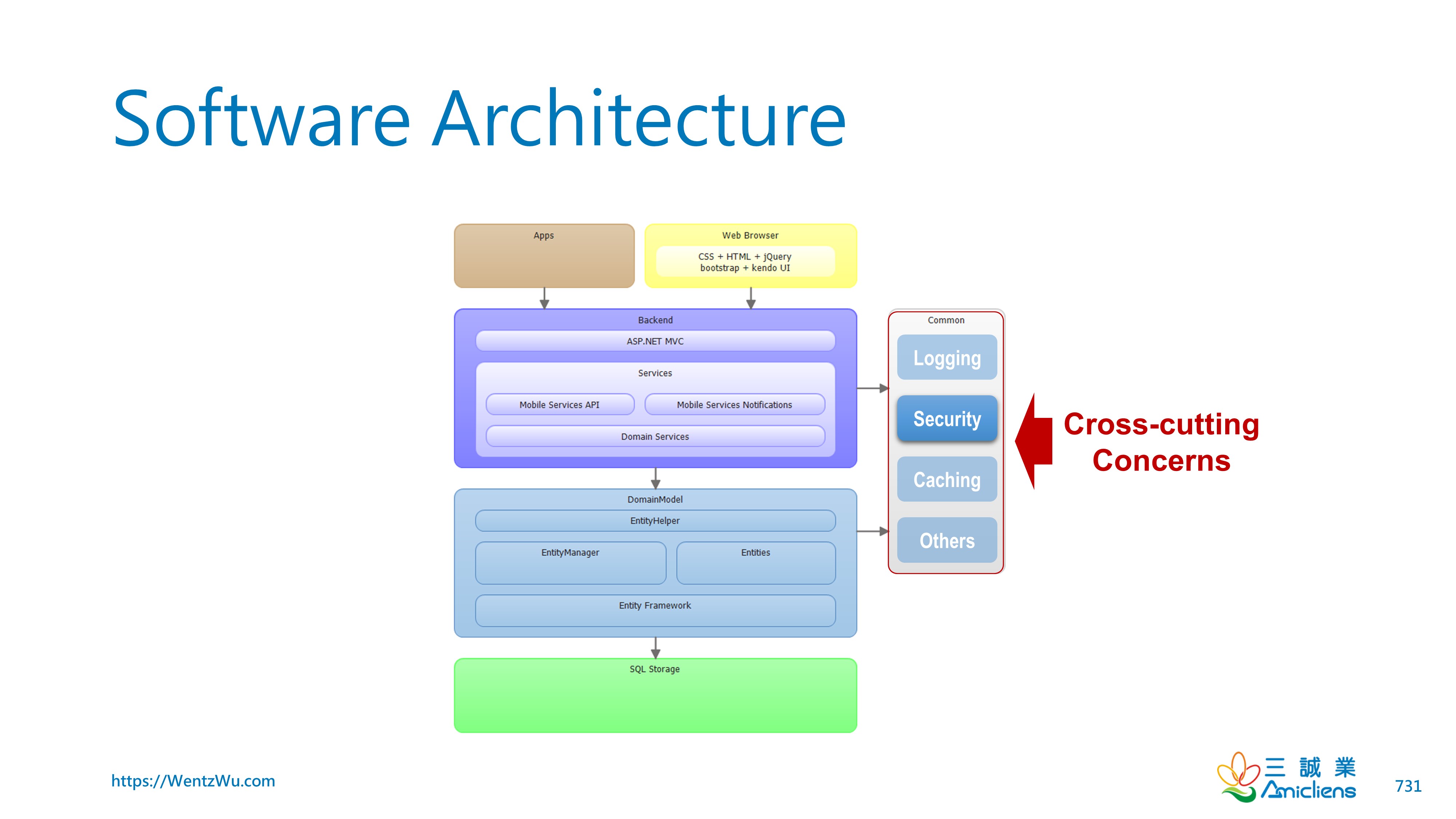
As the foremost artifact of a solution, architecture is the conceptual, logical, and physical representation of an object (the solution) from various viewpoints or perspectives, which identifies its building blocks, relationships, interactions, boundaries, interfaces, environment, and context and guides the evolution of the solution across its life cycle.
~ Wentz Wu
Definitions
A set of related physical and logical representations (i.e., views) of a system or a solution. The architecture conveys information about system/solution elements, interconnections, relationships, and behavior at different levels of abstractions and with different scopes. (Source: NIST SP 800-160 Vol. 1)
that set of design artefacts or descriptive representations that are relevant for describing an object such that it can be produced to requirements (quality) as well as maintained over the period of its useful life (change) (Source: Zachman:1996, ISO/TR 20514:2005)
fundamental organization of a system embodied in its components, their relationships to each other, and to the environment, and the principles guiding its design and evolution (Source: ISO/IEC 15288:2008)
set of concepts and rules for a system that describes the inter-relationship between entities in the entire system, independent of the hardware and software environment Note 1 to entry: Architecture is described through a series of viewpoints that might be at varying levels of generality/specificity, abstraction/conception, totality/component, and so on. See also “communications viewpoint”, “functional viewpoint”, “organizational viewpoint” and “physical viewpoint” definitions below. (Source: ISO/TR 26999:2012)
fundamental concepts or properties of a system in its environment embodied in its elements, relationships, and in the principles of its design and evolution (ISO/IEC/IEEE 42010:2011)
representation of the structure of the item or element that allows identification of building blocks, their boundaries and interfaces, and includes the allocation of requirements to these building blocks (Source: ISO 26262-1:2018)
conceptual structure of a system Note 1 to entry: A system may consist of several interacting subsystems, each with its own architecture. (Source: ISO/IEC TR 29108:2013)
set of principles on which the logical structure and interrelationships to an organization and business context are based Note 1 to entry: Software architecture is the result of software design activity. (Source: ISO/TR 18307:2001)
specific configuration of hardware and software elements in a system (Source: IEC 61508-4)
To prevent security warning messages as shown above during the installation process of my CISSP test engine, WUSON Practice Field (WPF), I placed an EV Code Signing Certificate order to Sectigo on July 23 and received the EV Code Signing Token today, Aug. 12. It takes 20 days to fulfill the order. It may take longer if no complaints about their performance and services are made. The validation work, not including token delivery time, should be completed in one week as a normal situation.
WUSON Practice Field (WPF) 是吳文智老師及教練群精心研發的CISSP考試引擎,以及全球唯一支援中、英文對照的CISSP題庫。主要的題庫內容由吳老師的CISSP每日一題(Wentz QOTD)組成。吳老師的CISSP每日一題歷經國內外考生實戰驗證,是最能訓練CISSP考生邏輯思考及整合觀念,且公認難度相當高的CISSP練習題與模擬題庫。經過WPF專業CISSP題庫的洗禮,讓您可以更從容地順利通過真實考試!
Specifications such as Zigbee, ISA100.11a, WirelessHART, MiWi, 6LoWPAN, Thread, and SNAP defines high-level communication protocols for low-rate wireless personal area networks (LR-WPANs) based on IEEE 802.15.4. Which of the following is not a class of Zigbee devices? (Wentz QOTD) A. Router B. Multiplexer C. End device D. Coordinator
Wentz’s book, The Effective CISSP: Security and Risk Management, helps CISSP and CISM aspirants build a solid conceptual security model. It is a tutorial for information security and a supplement to the official study guides for the CISSP and CISM exams and an informative reference for security professionals.
Information Security
Security refers to the process of and the state reached by protecting something from danger or threat.
Information security is a discipline of protecting information assets from threats through security controls to achieve the security objectives of confidentiality, integrity, and availability, support business processes, and create value to fulfill the organizational mission and vision.